AHA
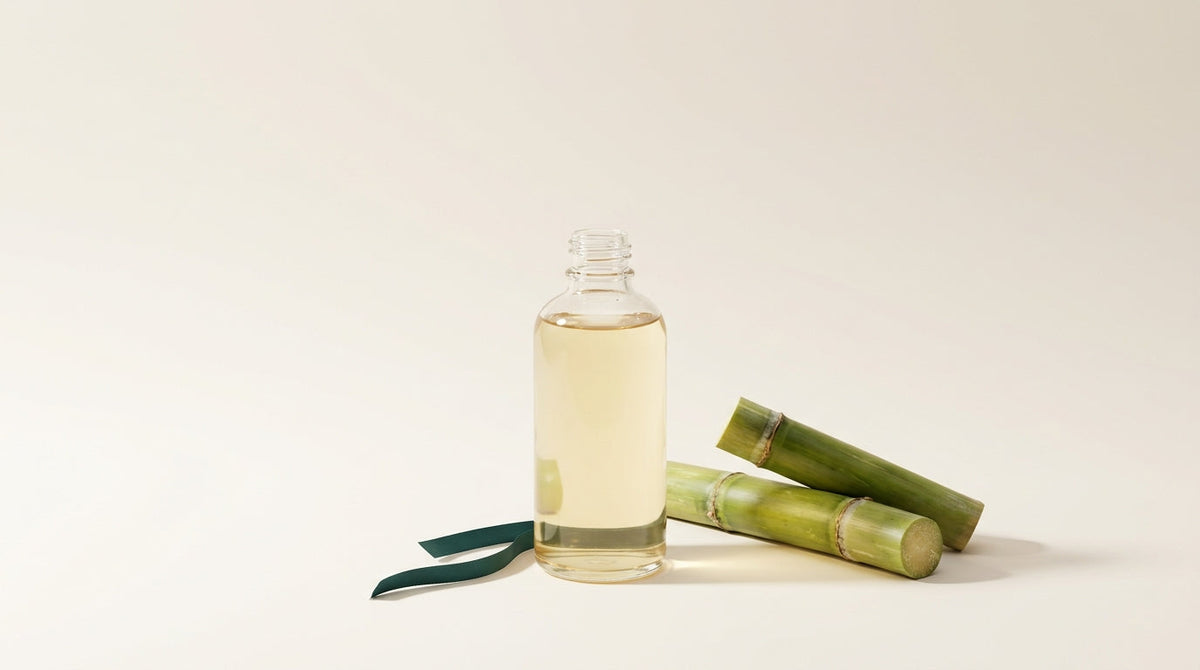
Quick answer: Glycolic acid is an alpha hydroxy acid (AHA) that gently dissolves the bonds holding dead cells to the skin's surface. Used regularly but moderately, it can leave skin looking smoother, brighter and more even. Start once a week, apply it to dry skin, moisturise afterwards and wear SPF every morning, because freshly exfoliated skin is more sensitive to the sun.
What does glycolic acid do for skin?
Glycolic acid exfoliates the skin's surface, helping shed the dead cells that can make a complexion look flat, congested or uneven. It has the smallest molecule of the AHAs, so it works efficiently on the upper layers of the skin, which is why many people notice a brighter, softer feel when they introduce it carefully.
Unlike a gritty scrub, glycolic acid doesn't rely on friction. It works chemically, which can give a more even exfoliation when used correctly. But more is not better: overuse can lead to stinging, dryness, flaking or a weakened skin barrier.

What are the main benefits of glycolic acid?
The best-known benefits relate to radiance and texture, and they build gradually with consistent use:
- Smoother texture: regular exfoliation can reduce the feel of rough or bumpy patches.
- Brighter-looking skin: removing dull surface build-up helps skin reflect light more evenly.
- More even-looking tone: it may help soften the look of post-blemish marks and uneven pigmentation over time.
- Clearer-looking pores: less dead-skin build-up means less surface congestion.
- Better-feeling product application: serums and moisturisers tend to spread more comfortably on smoother skin.
- Support for early signs of ageing: a smoother surface can soften the appearance of fine lines.
A glycolic toner or serum may give a silky feel straight away, but changes in tone and texture usually take weeks of patient use. You can browse exfoliating options in our AHAs & BHAs and texture & dullness collections.
Which glycolic acid product should I choose?
Glycolic acid appears in cleansers, toners, serums, masks and peels. Leave-on products are more active than rinse-off ones, so beginners usually do best starting with a gentle format:
- Cleanser: the mildest option, as contact time is short.
- Toner: lightweight and easy to add after cleansing, but easy to overuse.
- Serum: more targeted; follow with a simple moisturiser.
- Peels: stronger, and best approached with professional guidance, especially for sensitive skin.
Look for formulas that also contain calming or hydrating ingredients. If your skin feels tight, sore or unusually reactive, pause exfoliation and focus on barrier repair.
Can I use glycolic acid with retinol?
Many people can use both in the same routine, but not usually on the same night when starting out. Both can irritate if overused, so alternating evenings is the safer approach:
- Use glycolic acid one evening a week.
- Use retinol on a different evening, once your skin already tolerates it.
- Keep the other nights for moisturiser and barrier care.
- Increase frequency only if there is no ongoing dryness, burning or peeling.
- Wear broad-spectrum SPF every morning.
If you use prescription retinoids or have rosacea, eczema or very sensitive skin, get professional advice before combining actives.
Can I use glycolic acid and vitamin C together?
Both are popular for dullness, but layering them at the same time can be too much for some skin. A simple pattern is vitamin C in the morning with sunscreen on top, and glycolic acid on selected evenings. If your vitamin C already tingles or your skin barrier feels fragile, hold off on glycolic acid until your skin is comfortable again.
Glycolic acid or salicylic acid: which is better for me?
They suit different concerns:
- Glycolic acid (AHA): water-soluble, works mainly on the surface. Best for dullness, rough texture and uneven tone.
- Salicylic acid (BHA): oil-soluble, works within pore build-up. Best for blackheads, excess oil and congestion; see our acne & breakouts collection.
Some people use both, but on alternate days rather than stacked together.
Can glycolic acid be used on the body?
Yes. Body products use it to smooth rough elbows, knees, arms and legs. Some people use it on the underarms for roughness or uneven tone, but the area is sensitive, so avoid it straight after shaving or waxing and stop if it stings. In scalp products, exfoliating acids may help lift flakes and product build-up, but they are not a treatment for scalp conditions.
How do I use glycolic acid safely?
- Start low and slow: once a week is enough at first.
- Apply to dry skin: damp skin can make acids feel stronger.
- Avoid the eye area: the skin there is thinner and more reactive.
- Moisturise well afterwards to support the barrier.
- Use sunscreen daily while using any exfoliating acid.
- Skip compromised skin: not after shaving, sunburn, procedures or irritation.
- Listen to your skin: burning, lasting redness or peeling means stop and reassess.
Used with care, glycolic acid can be a practical part of a routine for smoother, brighter-looking skin. If you're unsure which strength or format suits you, our consultation service can help.
Educational content only — not medical advice. If a product causes persistent irritation, stop use and consult a GP or dermatologist.

Dr. Tanveer Ahmed
MBBS/FCPS · Founder & Clinical Director, Celsia Skin
MBBS/FCPS · Founder & Clinical Director, Celsia Skin
Was this content helpful?
Thank you for your feedback — it helps us improve.
Good to know
Frequently asked questions
How often should I use glycolic acid?
Start once a week and increase gradually to two or three times a week only if your skin shows no ongoing dryness, stinging or peeling. Many people never need to use it daily.
Does glycolic acid make skin more sensitive to the sun?
Yes. Exfoliating acids can increase sun sensitivity, so wear a broad-spectrum SPF every morning while using glycolic acid and for a week after stopping.
Can I use glycolic acid and retinol on the same night?
It is usually best not to when starting out. Alternate evenings instead, and only combine them more closely once your skin tolerates both well.
Is glycolic acid suitable for sensitive skin?
It can be too strong for very sensitive or rosacea-prone skin. Gentler acids such as PHAs or lactic acid may suit better; patch test first and seek advice if unsure.
How long does glycolic acid take to work?
A smoother feel can appear within days, but visible changes in tone and texture usually take several weeks of consistent, moderate use.