Hydration
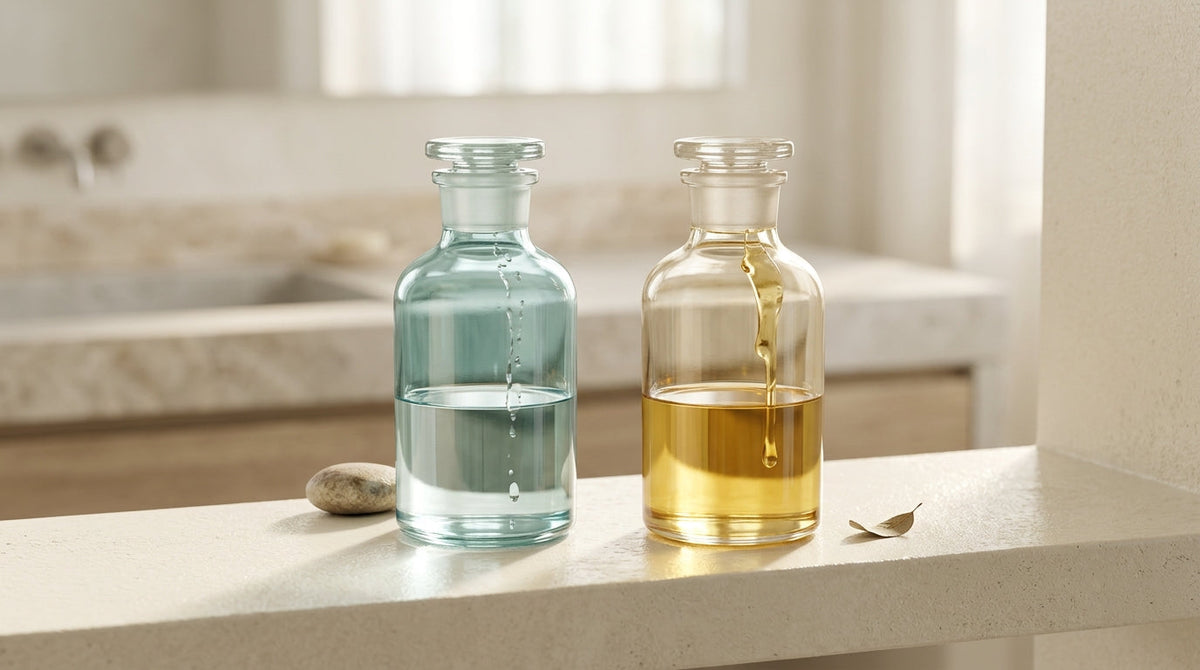
Quick answer: dry skin is a skin type that lacks oil; dehydrated skin is a temporary state that lacks water — and even oily skin gets dehydrated in a heatwave. Dry skin needs richer creams; dehydrated skin needs humectants like hyaluronic acid sealed in with a light moisturiser.
The 30-second self-test
- Dehydrated: skin looks dull, feels tight after cleansing but can still get shiny by afternoon; fine lines look more obvious when you gently press the cheek.
- Dry: flaking, rough texture year-round, rarely gets oily, feels comfortable only with rich creams.
- Both at once is common in summer: a dry skin type that's also lost water to heat and air conditioning.
Why heatwaves dehydrate even oily skin
Heat increases water loss through the skin; air conditioning strips humidity; more time in the sun plus more frequent cleansing accelerates both. The skin responds to the water shortage by producing more oil — which is why "tight but shiny" is the signature heatwave complaint. For general hot-weather health advice, UKHSA's staying safe in hot weather guidance is a useful reference alongside your skincare routine.

Fixing dehydration (water shortage)
- Humectant serum on damp skin — hyaluronic acid draws water into the upper layers; applying to damp skin gives it water to hold.
- Seal it with a lightweight moisturiser — a humectant without a seal can leave skin feeling drier in very hot, dry air.
- Ease off the acids. Over-exfoliation is a leading cause of summer dehydration.
Fixing dryness (oil shortage)
Richer creams with barrier lipids do the work — see the barrier repair collection and gentle cream cleansers from Cetaphil and Avène that clean without stripping what little oil dry skin has.
Does drinking water help?
Hydration matters for overall health, but drinking extra water doesn't directly rehydrate the skin's surface — topical humectants and a sealed barrier do. Do both, but don't expect a water bottle to replace a moisturiser.
Unsure which one you are? The free online consultation identifies your skin type vs its current state and builds the routine to match — or browse hydrating serums to start simple.
Educational content only — not medical advice.

Dr. Tanveer Ahmed
MBBS/FCPS · Founder & Clinical Director, Celsia Skin
MBBS/FCPS · Founder & Clinical Director, Celsia Skin
Was this content helpful?
Thank you for your feedback — it helps us improve.
Good to know
Frequently asked questions
What is the difference between dry and dehydrated skin?
Dry skin is a type that lacks oil and needs richer creams; dehydrated skin is a temporary state that lacks water and needs humectants like hyaluronic acid. Oily skin can be dehydrated too — tight but shiny is the giveaway.
Can hot weather dehydrate my skin even if it is oily?
Yes. Heat increases water loss and air conditioning strips humidity; skin often responds by producing more oil, masking the underlying dehydration.
Which ingredients actually rehydrate skin?
Humectants — hyaluronic acid, glycerin, urea — draw water into the skin, and a moisturiser on top seals it in. Clinical work on well-formulated hyaluronic acid shows measurable reductions in water loss.
Does drinking more water fix dehydrated skin?
Not directly. Overall hydration supports health, but the skin surface rehydrates through topical humectants sealed with moisturiser, not through extra glasses of water.
Can hyaluronic acid make dehydration worse?
In very dry air, a humectant left unsealed can pull water from deeper skin and let it evaporate. Always apply hyaluronic acid to damp skin and follow with a moisturiser.