Hydration
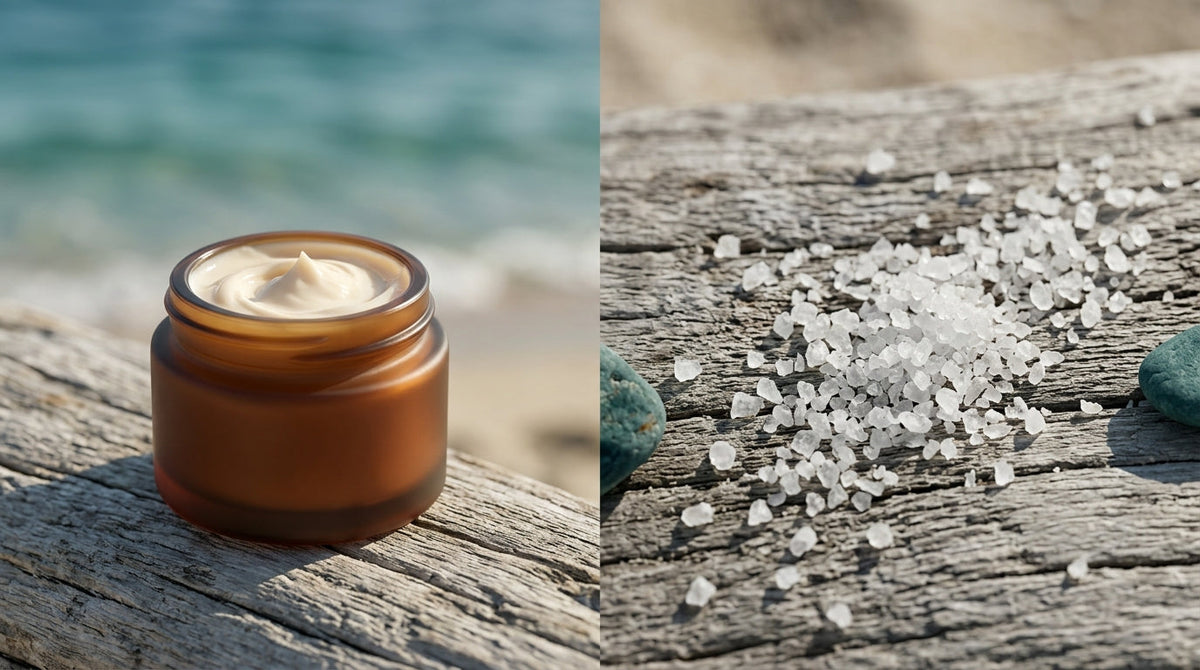
Quick answer: Saltwater's effect on skin depends heavily on your individual skin type — some find it mildly exfoliating and clarifying, while others, particularly those with sensitive skin, eczema, or rosacea, find it stripping and irritating. Rinsing off promptly after a swim and following up with barrier-supportive skincare is a sensible approach for most people heading into UK wild-swimming season.
Is seawater good or bad for your skin?
Seawater's effect on skin genuinely varies from person to person, which is why anecdotal reports about it are so mixed. Saltwater contains minerals such as magnesium and potassium, and some people report their skin feeling smoother or their complexion looking brighter after sea swimming, potentially linked to the mild exfoliating effect of salt on the skin's surface.
On the other hand, saltwater is also drying, and for people with an already compromised or sensitive skin barrier, that same salt content can pull moisture out of the skin, leaving it feeling tight, rough, or irritated rather than refreshed. Seawater quality and temperature also play a role; colder water and choppier conditions can be more stripping than a calm, warm sea. For most people with generally resilient skin, occasional sea swimming is unlikely to cause lasting issues, especially if followed by a fresh water rinse and a good moisturiser. For those with more reactive or compromised skin, it's worth treating sea swimming as something to ease into gradually rather than assuming it will suit you simply because it's natural. Our sensitivity and barrier repair collections are useful for supporting skin around wild swimming sessions either way.

Can saltwater help with breakouts?
There's a long-standing belief that seawater can help with breakouts, and there is some plausible basis for it, though it's not a guaranteed or universal effect. The mild antimicrobial properties of salt and its gentle exfoliating action may help reduce the appearance of surface congestion for some people, and time spent outdoors, away from daily product buildup, can itself be a helpful reset for skin prone to congestion.
However, saltwater can also dry out and irritate skin, and for some people with breakout-prone or sensitive skin, this dryness can actually trigger more oil production as skin tries to compensate, potentially making congestion worse rather than better. Seawater is also not a controlled or sterile environment, and swimming in busier coastal waters carries some general exposure to bacteria and pollutants that isn't necessarily beneficial for compromised or broken skin. The safest approach is to observe how your own skin responds after a swim rather than assuming a universally positive effect, and to always rinse thoroughly with fresh water afterwards. If breakouts are a persistent, more significant concern, our acne and breakouts collection and a consultation offer a more targeted approach than relying on the sea alone.
Does sea swimming make eczema or rosacea worse?
For many people with eczema or rosacea, saltwater can be more irritating than helpful, though individual experiences do vary. Eczema-prone skin already has a compromised barrier that struggles to retain moisture, and the drying, mineral-rich nature of seawater can exacerbate this, sometimes triggering a flare or increased itchiness after swimming. Rosacea-prone skin tends to be more reactive to environmental triggers generally, including temperature changes, wind, and mineral content in water, so a sea swim, particularly in cold or choppy conditions, can sometimes trigger flushing or increased sensitivity.
That said, some people with these conditions report no issues at all, or even find gentle, calm sea swimming pleasant, which underscores how individual this response is. If you have either condition and want to try sea swimming, a cautious approach is sensible:
- Keep sessions shorter initially
- Rinse with fresh water immediately afterwards
- Follow with a fragrance-free, barrier-supportive moisturiser
The NHS has general information on eczema and the British Association of Dermatologists covers rosacea in more detail. Our rosacea and redness and sensitivity collections are worth exploring if you're managing either condition.
Whether the sea leaves your skin feeling great or a little worse for wear really does come down to your individual skin. Listen to how your skin responds, keep barrier-supportive skincare close at hand for after your swim, and if you're managing a specific condition like eczema or rosacea, our sensitivity collection or a consultation can help you swim with more confidence.
Educational content only — not medical advice. Flares that are severe or don't settle with home care are worth discussing with a GP or dermatologist.

Dr. Tanveer Ahmed
MBBS/FCPS · Founder & Clinical Director, Celsia Skin
MBBS/FCPS · Founder & Clinical Director, Celsia Skin
Was this content helpful?
Thank you for your feedback — it helps us improve.
Good to know
Frequently asked questions
Is seawater good or bad for your skin?
It depends on your skin type. Some people find it mildly exfoliating and clarifying, while others, especially those with sensitive or compromised skin, find it drying and irritating.
Can saltwater help with breakouts?
There's a plausible case for mild antimicrobial and exfoliating effects, but saltwater can also dry out skin and trigger extra oil production in some people, so results vary and it isn't a guaranteed fix.
Does sea swimming make eczema or rosacea worse?
For many people with these conditions, saltwater can be more irritating than helpful due to its drying and mineral content, though individual responses vary. A cautious approach with shorter sessions is sensible.
How should I care for my skin after sea swimming?
Rinse thoroughly with fresh water as soon as possible and follow with a fragrance-free, barrier-supportive moisturiser to help replace lost hydration.
Is it safe to sea swim regularly with sensitive skin?
Many people with sensitive skin can sea swim comfortably if they ease in gradually, rinse promptly, and support their barrier afterwards, but it's worth monitoring how your own skin responds each time.