Post-Summer
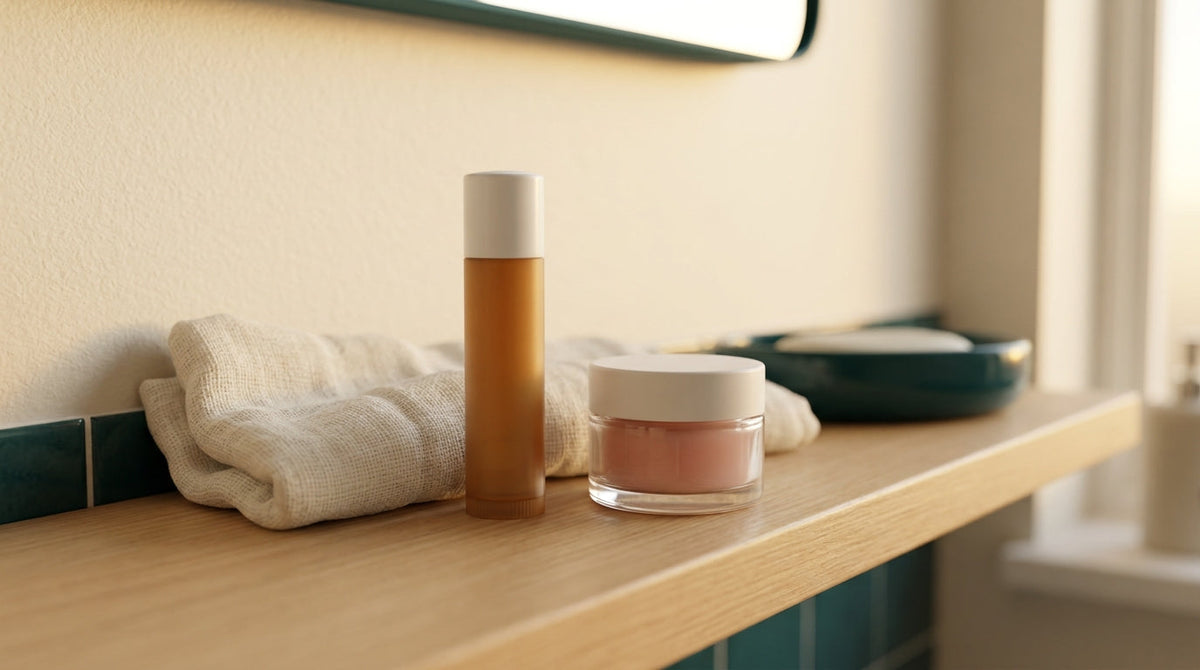
Quick answer: Lips can absolutely sun damage in the same way skin can — they have no oil glands and very little melanin protection, so they dry out, chap, and show signs of environmental stress faster than the rest of the face. Supporting the lip barrier alongside the rest of your skincare, rather than treating lips as an afterthought, is what most routines still miss.
Can lips get sun damaged like skin?
Lips are covered by a much thinner layer of skin than the rest of the face, with little to no melanin and no oil glands to help retain moisture or offer natural protection. This means UV exposure affects them differently, and often more visibly, than facial skin. Cumulative sun exposure over a season can leave lips feeling persistently dry, rough, or prone to flaking, and the delicate vermilion border (the line where the lip meets the surrounding skin) is particularly exposed.
The British Association of Dermatologists notes that lips are a commonly overlooked site for sun protection, and the NHS recommends including lip protection as part of a broader sun safety routine, since this area is exposed to the same UV radiation as everywhere else on the face. Because lips can't tan or build the same protective response skin does, the effects of summer sun exposure tend to show up as ongoing dryness and a rough, uneven texture rather than colour change. This is why lip care deserves the same consistency as the rest of a skincare routine, particularly toward the end of a long, sunny season when cumulative exposure has had time to add up. Supporting the lip barrier with a hydrating, occlusive balm and staying mindful of sun exposure going forward is a simple way to help the area recover. If you're building out a wider routine to support skin that has had a demanding summer, our barrier repair collection is a good place to start.
Does lip balm with SPF actually work?
An SPF-formulated lip balm can help protect the delicate lip area from further UV exposure in the same way sunscreen does for facial skin, provided it's reapplied often enough. Lip balms tend to wear off faster than facial sunscreen because they're removed through eating, drinking, and licking your lips, so the practical challenge is less about whether the formula works and more about consistent reapplication throughout the day.
The NHS advises applying sun protection generously and topping it up regularly, and this applies just as much to lips as to any other exposed skin. Choosing a balm with a stated SPF and layering it before extended time outdoors is a sensible habit, especially into the tail end of summer when UV levels can still be meaningfully high on clear days. It's worth remembering that SPF lip balm helps reduce further UV exposure going forward; it doesn't reverse dryness or texture change that has already happened, which is where a separate hydrating, barrier-supporting balm comes in for repair alongside protection. Pairing daily SPF habits with the rest of your skincare, including facial sunscreen, is the most reliable way to look after this often-neglected area. You can browse our full range of everyday and reef-safe formulas in SPF & sunscreen for options that suit a daily routine.

Why are my lips still dry even though I moisturise?
If lips stay dry despite regular moisturising, it's often because the product being used is hydrating but not sealing in that moisture, or because the underlying barrier needs more targeted support after prolonged sun and environmental exposure. Common reasons lip balm isn't working as well as it should:
- The product offers short-term comfort rather than supporting the skin's natural barrier function over time
- Licking dry lips, since saliva evaporates quickly and can leave the area drier than before
- Applying balm only when lips already feel uncomfortable, rather than building it into a morning and night routine
- Skipping SPF during the day, leaving lips exposed to further UV damage
Look for balms with occlusive, barrier-supporting ingredients that help lock in moisture rather than products that offer only a fleeting, cosmetic feel. If dryness, cracking, or discomfort is persistent, unusually severe, or doesn't improve with a few weeks of consistent care, it's worth speaking to a pharmacist or GP, since ongoing lip changes can occasionally need clinical attention that skincare alone can't address. For a personalised view of how to build lip care into a wider barrier-support routine, our team is happy to talk it through — you can book a consultation at any time.
Lips are easy to overlook in a skincare routine, but after a full summer of sun, wind, and pool time, giving them the same consideration as the rest of your face can make a real difference to comfort and appearance. If you'd like a routine tailored to your skin's needs as summer winds down, our team at Celsia Skin is here to help — get in touch via consultation and we'll point you in the right direction.
Educational content only — not medical advice. Cracked or persistently sore lips that don't improve with care are worth a pharmacist or GP check.

Dr. Tanveer Ahmed
MBBS/FCPS · Founder & Clinical Director, Celsia Skin
MBBS/FCPS · Founder & Clinical Director, Celsia Skin
Was this content helpful?
Thank you for your feedback — it helps us improve.
Good to know
Frequently asked questions
Can lips get sun damaged like skin?
Yes. Lips have thinner skin, little melanin, and no oil glands, so UV exposure shows up as persistent dryness, roughness, and flaking rather than tanning. Cumulative sun exposure over summer can leave lips feeling uncomfortable well into autumn.
Does lip balm with SPF actually work?
Yes, an SPF lip balm helps protect against further UV exposure, but it needs frequent reapplication since eating, drinking, and licking your lips wear it off quickly. It protects going forward rather than repairing existing dryness.
Why are my lips still dry even though I moisturise?
Some balms hydrate briefly without sealing moisture in, so dryness returns quickly. Look for occlusive, barrier-supporting formulas and apply consistently morning and night rather than only when lips feel uncomfortable.
When should I see a doctor about dry or cracked lips?
If dryness, cracking, or discomfort is severe, persistent, or doesn't improve after a few weeks of consistent care, it's worth speaking to a pharmacist or GP, as this can occasionally need clinical attention beyond skincare.
How does Celsia Skin recommend caring for sun-exposed lips?
Pair a hydrating, barrier-supporting balm with daily SPF lip protection, and treat lip care as a consistent part of your routine rather than an occasional fix. For personalised advice, book a consultation with our team.