Autumn Skincare
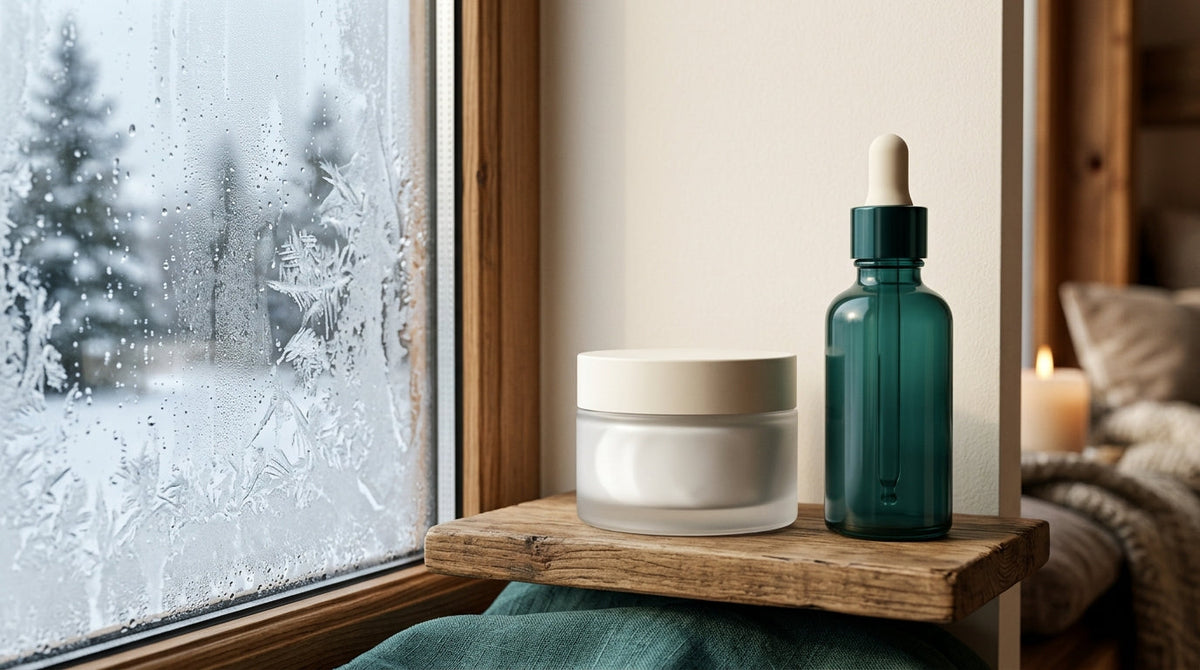
Quick answer: Some skin reacts almost immediately to a sudden cold snap rather than gradually, because a sharp temperature drop causes rapid moisture loss and quick shifts in blood vessel behaviour that a slow seasonal transition doesn't produce. This is more about how fast the barrier and blood vessels are asked to adjust than how sensitive your skin is overall — and it's manageable with the right support.
Why does my skin react to sudden cold?

A sudden drop in temperature asks a lot of skin in a short space of time, which is why redness, tightness, stinging or flushing can appear almost immediately rather than building up gradually. Two things happen at once:
- Moisture loss: cold air holds less moisture than warm air, so stepping into a cold snap can pull water from the skin's surface quickly.
- Vascular response: blood vessels constrict and then dilate as you move between cold outdoor air and warm indoor heating, which can show up as visible redness or a flushed feeling.
This rapid back-and-forth is more demanding on skin than a slow, gradual cooling that gives the barrier time to adapt. People already using active ingredients like retinol or exfoliating acids often notice sudden-cold reactivity more intensely, since their barrier has less resilience in reserve. Supporting skin with a barrier repair moisturiser and easing off strong actives for a few days after a sharp weather change can help skin recalibrate.
Is reactive skin the same as sensitive skin?
They overlap but aren't quite the same. Sensitive skin generally describes a lower overall tolerance threshold — it reacts to a wider range of triggers, including certain ingredients, fragrance or weather, fairly consistently over time. Reactive skin more often describes a barrier that responds intensely to specific, identifiable triggers — a sudden temperature change, alcohol, spicy food, or a new active — while otherwise behaving normally.
The right approach differs slightly: consistently sensitive skin usually benefits from a simplified, fragrance-free routine used year-round, while reactive skin often does well with a core gentle routine plus extra barrier support introduced around known trigger moments, like the first cold snap of the season.
Explore our barrier repair range, and if reactions are becoming more frequent or severe, book a consultation with our team for a tailored conversation.
Educational content only — not medical advice. Frequent flushing, persistent redness or suspected rosacea deserve a GP or dermatologist review.

Dr. Tanveer Ahmed
MBBS/FCPS · Founder & Clinical Director, Celsia Skin
MBBS/FCPS · Founder & Clinical Director, Celsia Skin
Was this content helpful?
Thank you for your feedback — it helps us improve.
Good to know
Frequently asked questions
Why does my skin flare up as soon as it turns cold?
A sudden cold snap causes rapid moisture loss and quick changes in blood vessel behaviour, which can trigger redness or stinging almost immediately. This differs from the slower adjustment skin makes during a gradual seasonal transition.
Is this the same as having rosacea?
Not necessarily. Sudden-cold reactivity can happen to people without rosacea, though those with rosacea may notice it more intensely. If flushing is frequent or persistent, it's worth discussing with a professional.
Should I stop using retinol or acids when the weather turns cold?
Easing off strong actives for a few days after a sharp temperature change can give your barrier time to recalibrate. You can usually reintroduce them gradually once your skin settles.
What's the difference between reactive and sensitive skin?
Sensitive skin tends to react fairly consistently across a wide range of triggers, while reactive skin often responds intensely to specific, identifiable triggers like sudden cold. The two can overlap.
What can help calm skin after a cold-snap flare-up?
A barrier repair moisturiser and a simplified routine for a few days can help skin settle. If reactions are frequent or worsening, a consultation can help identify the right long-term approach.