Oily Skin
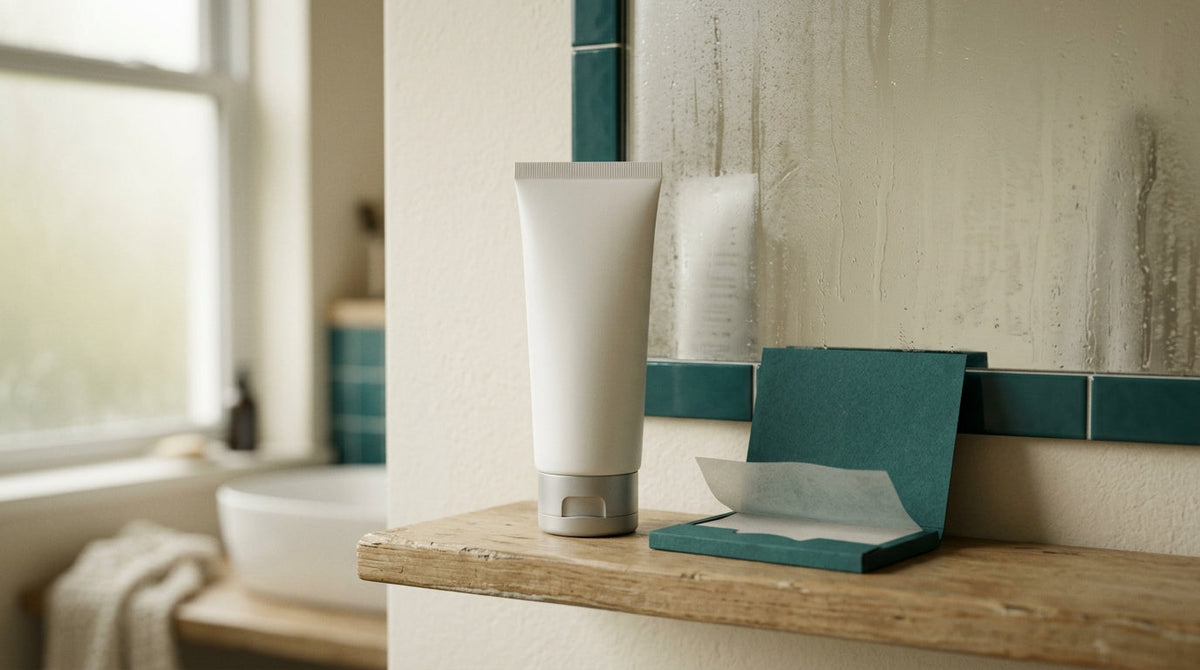
Quick answer: muggy August air, not the heat itself, is usually the real culprit behind an oilier T-zone. When humidity is high, sweat and surface moisture can't evaporate off the skin as easily, so oil sits on the surface for longer — switching to a lighter, oil-balancing moisturiser and keeping cleansing consistent usually solves it without stripping the skin barrier.

Why is my skin oilier in humid weather?
Sebaceous glands respond to the surrounding environment as much as they do to temperature. In humid air, the moisture that would normally evaporate from your skin's surface instead lingers, which can make pores look more visible and the T-zone appear greasier by mid-afternoon.
- Oil and sweat sit on the surface longer instead of evaporating
- Pores can look more visible under a film of surface moisture
- Shows up most across the forehead, nose and chin, where oil glands are concentrated
- Cheeks often stay comparatively normal or even dry by comparison
This isn't a sign your skin type has suddenly changed overnight — it's a temporary response to atmospheric moisture combined with the oil your skin naturally produces. A well-considered skincare routine kit can help simplify this seasonal adjustment. If oiliness comes with ongoing congestion or breakouts, our acne and breakouts edit is worth a look, and for a tailored view of your own skin, booking a consultation is always the most reliable next step.
Should I change my moisturiser when it's humid but not hot?
Yes — it's worth reconsidering texture even when the temperature itself hasn't changed much. A rich, occlusive cream designed for drier autumn air can feel heavy once humidity climbs, and that heaviness is often mistaken for the product "not working" when it's really just the wrong texture for the moment.
Gel-creams, lightweight lotions and oil-free formulas tend to sit more comfortably on skin during muggy spells because they hydrate without adding an extra layer of occlusion the air doesn't require. This doesn't mean skipping moisturiser — under-moisturising oily, humid-weather skin can actually encourage more oil production as skin tries to compensate. Ingredients like niacinamide are popular during this transitional period, associated with a smoother, more refined-looking complexion without adding heaviness. Browsing the wider texture and dullness collection can also help you find a formula suited to this in-between stretch of weather.
Does humidity cause breakouts the same way heat does?
They contribute through slightly different routes, so it helps to treat them as related rather than identical problems.
- Heat increases sweat production, often combining with sunscreen and product residue left sitting on the skin
- Humidity changes how oil and moisture behave on the surface, so pores can look more congested for longer stretches of the day
- Consistent, gentle cleansing morning and evening — plus regular but not excessive exfoliation — helps manage the buildup during muggy weeks
If breakouts are persistent, painful, or leaving marks behind, the NHS's acne guidance or the British Association of Dermatologists' patient information are worth a read, alongside our acne and breakouts collection for supportive skincare in the meantime.
If muggy August weather has your T-zone behaving differently to the rest of your face, a quick routine tweak is usually all it takes to restore balance. Have a browse through our routine kits, or if you'd like more personalised guidance on textures and actives suited to your skin, our team is on hand via a consultation.
Educational content only — not medical advice. Persistent or painful breakouts deserve a GP or dermatologist review.

Dr. Tanveer Ahmed
MBBS/FCPS · Founder & Clinical Director, Celsia Skin
MBBS/FCPS · Founder & Clinical Director, Celsia Skin
Was this content helpful?
Thank you for your feedback — it helps us improve.
Good to know
Frequently asked questions
Why is my skin oilier in humid weather?
High humidity slows how quickly sweat and surface moisture evaporate, so oil sits on the skin for longer and pores can look more visible, especially across the T-zone. It's a temporary environmental response rather than a change in your underlying skin type.
Should I change my moisturiser when it's humid but not hot?
Yes, texture often matters more than temperature. Lightweight, oil-free formulas tend to feel more comfortable in humid air than rich, occlusive creams, without skipping hydration altogether.
Does humidity cause breakouts the same way heat does?
They contribute differently. Heat increases sweat and residue on the skin, while humidity changes how oil and dead skin cells behave at the pore level. Both can contribute to congestion if cleansing isn't kept consistent.
Do I need to exfoliate more in muggy weather?
Gentle, regular exfoliation can help manage the buildup of oil and dead skin that muggy conditions encourage, but over-exfoliating can disrupt the skin barrier, so little and often is generally the better approach.
Is oily-looking skin in humidity a sign I need a routine change?
Not necessarily a full change, but it's a good prompt to review your moisturiser texture and cleansing routine. A consultation can help confirm whether anything more specific is needed.